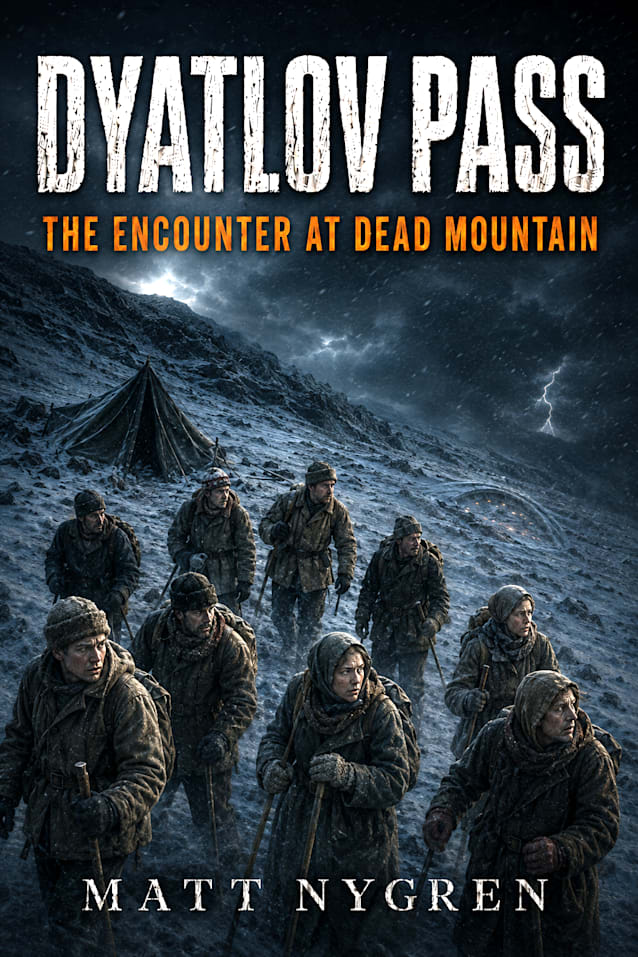
Nine hikers entered the northern Urals. None came home.
Winter, 1959.
Igor Dyatlov leads eight experienced companions beyond the last Soviet settlement and into one of the most desolate places on Earth. They are prepared for deep snow, brutal cold and weeks of isolation in a wilderness untouched by roads.
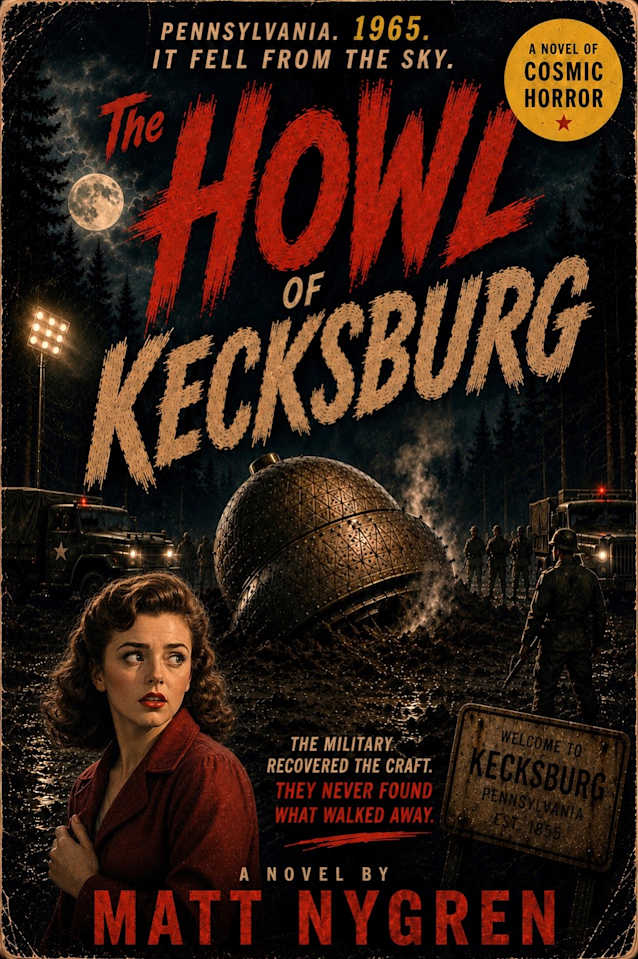
Something fell from the sky over Kecksburg, Pennsylvania, in 1965. The military recovered the craft. They never found what walked away.
When former investigator Daniel Ashcroft returns to Kecksburg after his father’s death, he expects a funeral, an empty house, and a lifetime of unresolved silence. Instead, he finds hidden files, missing-person...
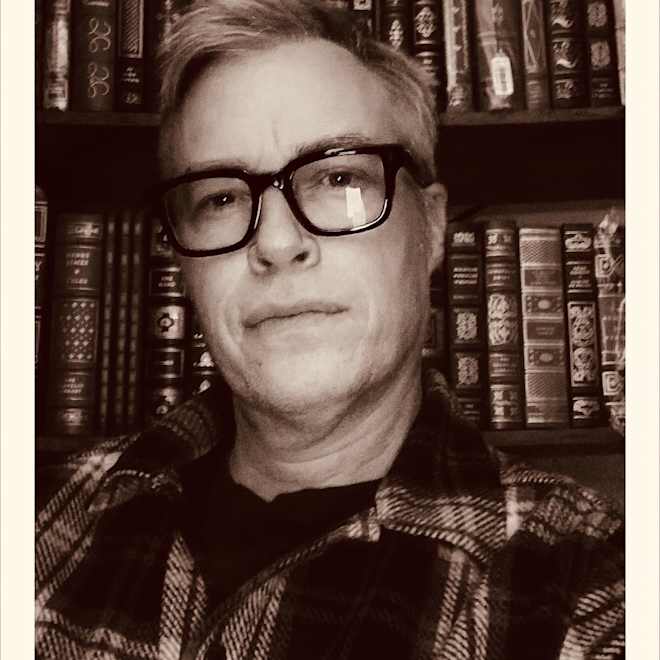
Matt Nygren is the author of political science nonfiction, epic fantasy, and science fiction exploring power, governance, and the forces reshaping modern society.
His nonfiction examines American democracy, contemporary political movements, institutional change, and the shifting balance between leadership, bureaucracy, and public trust. His work is grounded in systems thinking and written for readers interested in politics, governance, and the future of democratic institutions.
In fiction, Matt writes immersive speculative novels featuring hidden infrastructures, emerging global tensions, and the possibility of nonhuman intelligence. His stories combine large-scale worldbuilding with high-stakes conflict and institutional intrigue.
A software engineer with a degree in English literature from the University of California, Irvine, he brings analytical clarity and narrative depth to both fiction and nonfiction.
He lives and writes in Anaheim Hills, California.
Matt Nygren is the author of political science nonfiction, epic fantasy, and science fiction exploring power, governance, and the forces reshaping modern society.
His nonfiction examines American democracy, contemporary political movements, institutional change, and the shifting balance between leadership, bureaucracy, and public trust. His work is grounded in systems thinking and written for readers interested in politics, governance, and the...